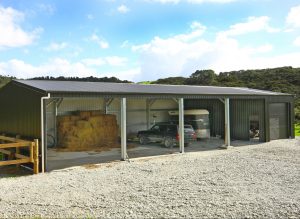
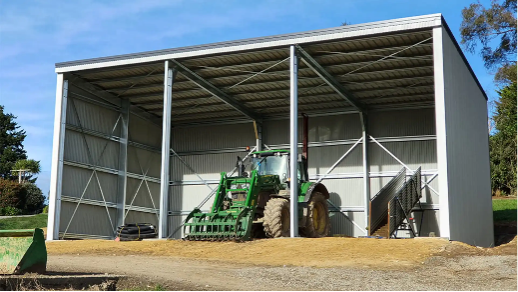
ORDER YOUR CONSENT EXEMPT KITSET FOR IMMEDIATE DELIVERY! | LEARN MORE
ORDER YOUR CONSENT EXEMPT KITSET FOR IMMEDIATE DELIVERY! | LEARN MORE
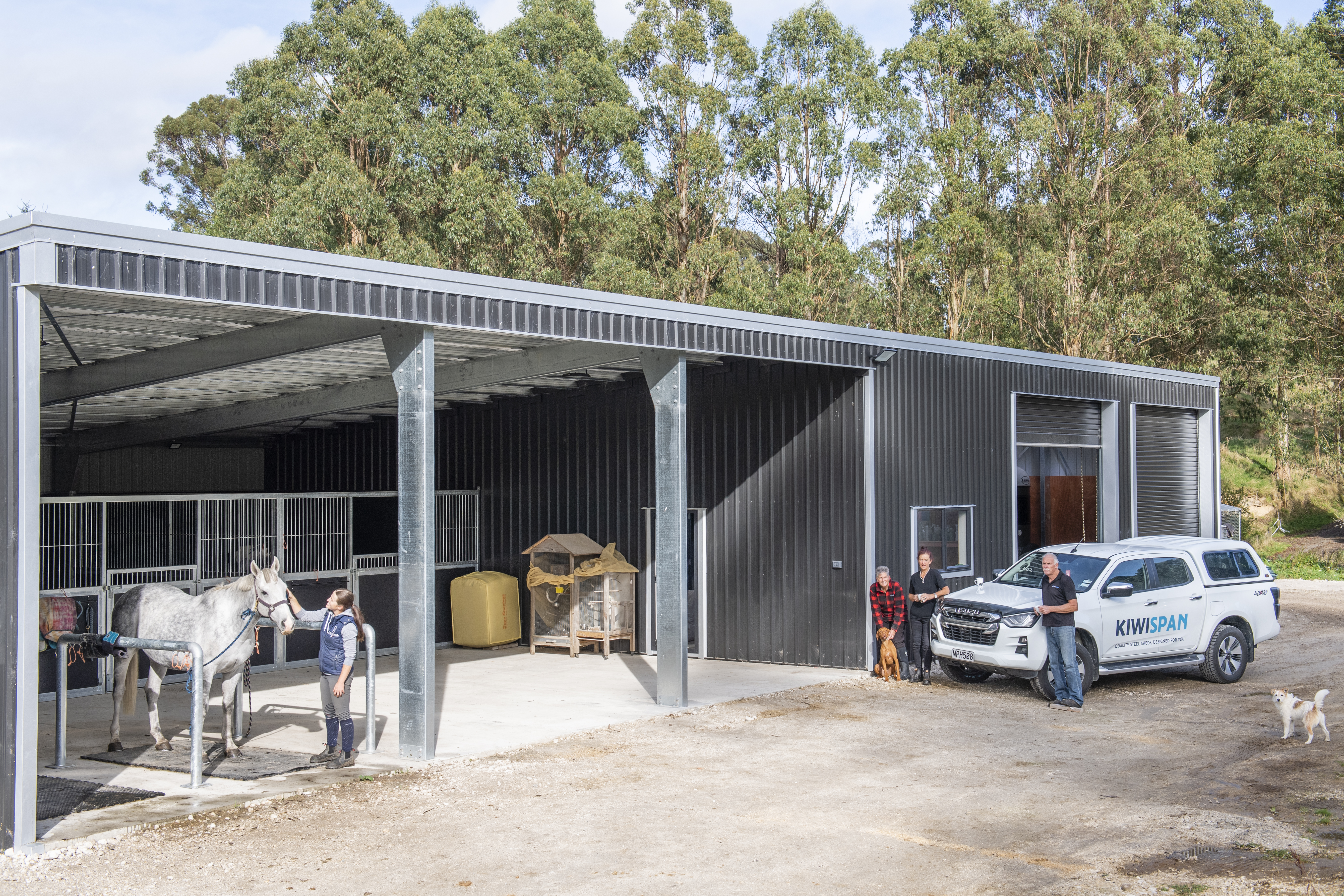


If you’re planning a new rural build, one of the first questions you’ll ask is about farm shed costs. In New Zealand, there’s no simple flat rate – because no two farms, sites or sheds are the same. From wind zones and ground conditions to span, height, and internal fit-out, every decision affects the final price.
While every farm shed is different, in New Zealand they typically fall within these ranges:
Understanding what drives farm shed costs will help you choose specifications that suit both your land and your budget. Whether you’re building for machinery storage, hay, livestock shelter or a multi-purpose workshop, here’s what you need to know about the biggest cost factors.
The most obvious factor influencing farm shed prices is size, but it’s more nuanced than just square metres.
Span (Width)
Wider sheds require stronger structural components. If you want a clear-span design (no internal columns), this requires heavier steel and engineered framing to maintain strength over distance. Clear spans are ideal for machinery access and flexible storage, but they increase material and engineering costs.
Length
Length is generally the simplest way to scale up a shed. Adding bays increases material and labour costs proportionally, but it’s often more cost-effective than increasing span.
Height
Wall height affects both steel quantity and engineering requirements. Taller sheds are common on farms to accommodate tractors, combines, stackers, or mezzanine storage, but increased height means you will require stronger framing and often higher wind loading considerations.
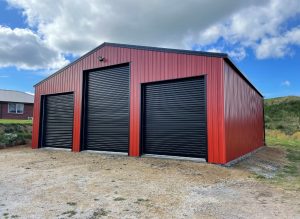
Your land plays a major role in determining farm shed costs. Site works can range from a few thousand dollars on flat, stable ground to $20,000+ for sloping, complex or remote sites.
Ground Conditions
Flat, stable ground is the most cost-effective starting point. Sloping sites may require excavation, retaining, or additional foundation work. Soft or unstable soils can require deeper footings or specialised foundation systems.
Access
Can large trucks and machinery easily access your site? If access is tight or remote, delivery and construction time may increase, impacting overall build costs.
Wind & Snow Zones
New Zealand’s varied geography means different structural engineering requirements depending on location. High wind zones, coastal exposure, or snow loading areas require stronger framing and fixings. These engineering upgrades protect your investment long-term but can increase upfront costs.
The concrete slab is often one of the biggest line items in a rural shed build. In many builds, the concrete slab alone can account for $100 – $200/m² depending on thickness and reinforcement requirements.
The thickness and reinforcing required will depend on:
If you’re storing heavy agricultural equipment, the slab may need to be thicker and more heavily reinforced. Adding features like drainage channels, wash-down areas, or integrated pits will also influence cost. It’s important to factor in not just the shed structure, but the total project, including foundations, when comparing farm shed prices.
The type and size of doors significantly impact your budget.
Roller Doors
Large roller doors are popular for machinery access but require heavy-duty tracking systems and motors (if automated). Commercial roller doors start from as little as $2,500 per door and if required a commercial motor will set you back between $1,200 and $1,600.
Sliding Doors
Often more cost-effective than roller doors, sliding doors are practical for wide openings and rural environments.
Multiple Open Bays
Some farmers opt for open-front designs for hay or equipment storage. While this reduces door costs, structural bracing must still meet engineering standards.
Remember – the more openings you include, the more structural adjustments are required to maintain building integrity.
Material choice affects both upfront and long-term value.
For pure storage, basic cladding may suffice. But if you’re planning to use the shed for maintenance, repairs, or livestock shelter, insulation and ventilation can be worthwhile upgrades.
A basic farm shed shell is one thing. A fully fitted rural workspace is another. Additional cost factors include:
Many farmers choose to future-proof their sheds by allowing for later expansion or additional fit-out. Planning for this early can save money long-term.
In New Zealand, most farm sheds typically range between $400 and $800/m² fully built, depending on specifications. A small, simple shed on flat ground will cost far less than a large, high-wind-zone, clear-span machinery shed with reinforced concrete and multiple roller doors.
Rather than focusing purely on square metre rates, it’s more helpful to consider:
A well-designed shed should support your daily operations efficiently and withstand New Zealand’s weather for decades.
Note that pricing can vary between KiwiSpan specialists, so the best way to get an accurate price is to request a tailored quote.
To give a clearer idea, here are some typical farm shed cost ranges:
When reviewing farm shed prices, clarity is key. Make sure quotes specify:
Engineering for your wind/snow zone
This ensures you’re comparing like-for-like and investing in a shed that’s built to last.
Ultimately, the right farm shed isn’t just about cost, it’s about value. By understanding the main drivers behind farm shed costs, you can make informed decisions that suit both your land and your bottom line.
Every farm is different – and the right shed should be designed around your land, your equipment, and the way you work. Whether you’re storing machinery, protecting hay, or creating a practical rural workspace, getting the specifications right from the start makes all the difference to long-term value.
With KiwiSpan, you’re not choosing an off-the-shelf solution. You’re investing in a purpose-built rural building engineered for New Zealand conditions and tailored to your needs.
If you’d like to explore your options, try KiwiSpan’s 3D Shed Builder to design and visualise your ideal farm shed in real time. You can customise size, span, height, doors, and colours to see what works best for your property.
Prefer personalised advice? Request a free quote and speak with your local KiwiSpan team about a shed solution that fits your farm and your budget.
Start planning today and take the first step toward a shed that works as hard as you do.